Monday, December 17, 2018

Musical styles.

Hip-Hop:

Hip hop was created in 1973 in the Bronx, New York City when DJ Kool hosted a party in his project. Whilst deejaying, Kool Herc put the same vinyl on each side of the turntable looping the drum loop. He would then invite local rappers to help entertain the party. DJ Kool Herc created a street organisation called 'Universal Zulu Nation' the purpose behind this organisation was to draw out teenagers from violence, drugs and gang life.

Image result for dj kool herchttps://goo.gl/images/DAzU2q


The image above show DJ Kool

Artists who have emerged from hip hop are:

Tupac   Image result for tupachttps://goo.gl/images/wJXZnk


  biggie smalls Image result for Biggie smallshttps://goo.gl/images/9Mx2gH
Surge Knight Image result for sure knighthttps://goo.gl/images/Co7aYa

Surge Knight is a record producer and was the owner of 'Death Row Records'. This record company rose to dominate the rap charts after Dr. Dre album the chronic, which came out in 1992. This record company also enjoyed several years of successes with artists such as - Tupac, Dr. Dre, Snoop Dogg, Outlawz and Tha Dogg Pound.

Hip hop comes with many different characteristics such as rapping, scratching with the turntables, break dancing and graffiti writing other elements such as bass lines and sampled beats along with rhythmic beat boxing.

Pop:
Pop music stands for popular music, Rock and Pop were very similar until late 1960's where they became extremely different.A lot of music on record charts are classed or seen as Pop music. Pop music is electric and also contains elements of urban, dance, rock, and country. The core elements of pop songs is that the songs are generally medium length, the structure is the basic format ;verse -chorus, Pop music is known to be very repetitive.
Some pop artists are shown below:
Adele Image result for Adele https://goo.gl/images/C8VYcV


Tom Jones Image result for tom jones https://goo.gl/images/26arxe


Madonna Image result for madonnahttps://goo.gl/images/BN6HZH


Michael Jackson Image result for mj  https://goo.gl/images/LhXW37


Justin Bieber Image result for justin bieber  https://goo.gl/images/x2n2Pj

Pop music began in the 1930's in the US with lively music named swing. Around the 1950's, rock'n'roll emerged and it was much louder and exciting to the usual type of pop music. It was songs about youthful rebellion and teenage love. 


Chords.

How to make a minor scale.
Example of F minor:
-Root,      t,  st,   t,    t,  st,    t ,   t ( t-tone, st- semi-tone).
F minor, G, Ab, Bb, C, Db, Eb, F.
1,       2,       3,         4,          5,    6,        7,      8.
minor,      ,major, minor,         , major,         ,minor

Major and Minor chords:
A chord is made up of 3 notes played together. This is commonly referred to as a triad, which has a root note, a major third above this root, and a perfect fifth above this root note. When a chord has these three notes alone, it is called a major triad.
The major triad (or major chord), along with the minor triad (or minor chord), is one of the basic building blocks of tonal music, the Western common practice period and Western pop, folk and rock music. It is considered consonant, stable, or not requiring resolution. A key characteristic of a Major chord is that it sounds happy whilst a minor chord sounds sad. 

A technique that can be used to work out a Major chord is the semi-tone technique (a semitone in music refers to one space between the keys). By starting on our root note, be it C for C Major or D for D Major, we can work out all Major chords by counting our root note as 1 and then proceeding to count 5 semitones, then four semitones. This is a method to work out the root, major third, and perfect 5th. 

This technique can also be used to work out minor chords, by starting on our root note, we can count four semitones and then five semitones. This method can help to work out the Minor 3rd and perfect 5th of the chord. Some Minor triads with additional notes, such as the Minor 7th chord may also be called Minor chords. A Minor triad can also be referred as a Minor 3rd interval with a Major third interval on top or as a root note, a note 3 semitones higher than the root, and a note 7 semitones higher than the root. Hence it can be represented by the integer notation (0,3,7).

A Major chord differs from a Minor chord in having a Major third above the root note instead of a Minor third. It can also be described as a Major third with a Minor 3rd on top, in contrast to a Minor chord, which has a Minor  third with a Major 3rd on top. They both contain 5th's, because a Major third (4 semitones) along with a Minor 3rd (3 semitones) equals a 5th (7 semitones). A diminished chord is a Minor chord with a lowered 5th - Minor chord - Wikipediahttps://en.wikipedia.org/wiki/Minor_chord

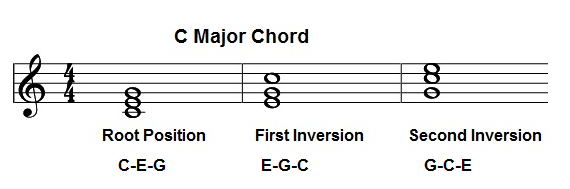
Inversions:Image result for major inversions

The image above shows and example of an inversion - Piano-Keyboard-Guide.com

The word inversion has a distinct, but related meaning when applied to intervals, chords, voices and melodies. An interval is inverted by raising or lowering either of the notes by one or more octaves so that the positions of the notes (within a chord) reverse, meaning the higher note becomes the lower note or the lower note becomes higher.

For an example, the image above shows the chord C Major. The root note is C so C was taken down an octave changing the position of the note but not changing the chord.

Thursday, November 29, 2018

Music Equipment.

Speakers:

Line Array Speakers:
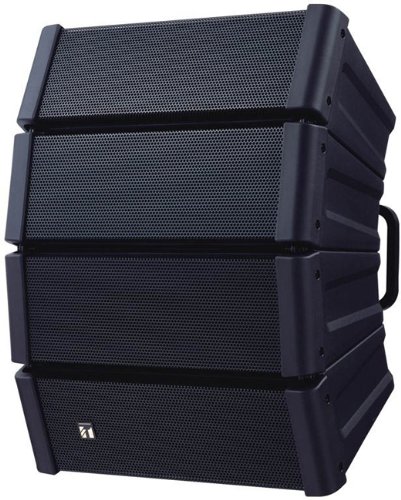
The Line Array speakers are a loud speaker system. Line array speakers are made up of many identical out loud speakers to create a near line source of sound. These speakers are mainly seen in concerts at the top of the stage up high so the sound can reach the far back of the audience, this is mainly why the speakers face different vertical angles to cover a greater depth of field.
The image of the speaker is shown below.
Image result for line array speakers


Image result for passive speakerhttps://goo.gl/images/1DVBPw
The passive speaker only has a port for the speak on cable meaning, it needs to be supplied with a separate power amplifier. Advantage of a passive speaker is you don't need a lot of wires connected to it. Disadvantage you have to connect a power amplifier to the speaker


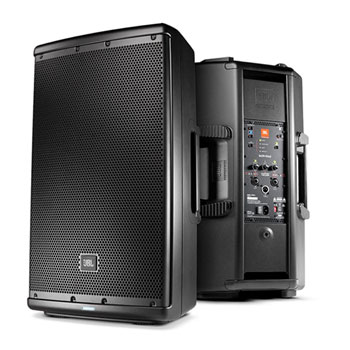
Image result for active speaker https://goo.gl/images/rWi8ni
The active speaker has the amplifier inside of it,  as you can see in the image the amplifier is found on the back of the speaker. The active speaker seems to make more noise than the passive speaker.


Mixers:
A mixer is very important, it makes the performances. A mixer has different channels and these channels allow more devices to be connected and routed through it. Channels are designed to accept microphones and devices such as amplifiers, preamps, or signal processors. 

An amplifier is an electronic device which is used in sound reproduction and is used for increasing the amplitude of electrical signals. 

A preamplifier converts a weak electrical signal to a strong signal what is noise-tolerant and is strong enough for further processing. 

A Digital signal processor can process data in real time making it easier for applications that can't tolerate delays.


Different Mixers

- Analogue mixer

Image result for analogue mixerhttps://goo.gl/images/bHm9Hz
-Digital mixer.

                   https://goo.gl/images/HzyLph


The difference between a Analogue and a Digital mixer is,
 an analogue mixer has a lot of outboard gear, this means it is heavy and hard to move around. Whereas all racks are inside of the digital mixer meaning this is easier to move if needed because you only need to move the mixer and not any outboard gear.

A power amp is used to power loud speakers. the image of a power amp is shown. below.
A power amp is only needed for an analogue mixer, this is because everything inside the digital mixer is inside.

https://goo.gl/images/Bheq3p


Video assessment:

https://youtu.be/vgMKO9VwCbw

This link leads to YouTube, it shows me connecting the mixer to the power amp and then to the passive speaker. Within this video I also set up a microphone (the Shure SM58).
Within this video I am explaining what I am doing in steps. I was watching my performance and how I was explaining the steps I could see that I was nervous and that I was also questioning myself. This video would have been better if I made myself seem more confident.  was watching a video of Dele demonstrating the set up, this is what helped me remember the steps. 


Microphones:
Dynamic:
-A dynamic microphone is usually found on stage
-Very durable - it is built to last long
-Capable of receiving  high SPL ( sound pressure levels).

Condenser:
-A condenser mic is usually found in the studio, or used to mic up a drum kit
-Very sensitive - picks up everything (sound)
-A condenser mic has a large diaphragm if used for a vocalist to pick up the voice whereas the small diaphragm would be used for something more specific, for example symbols on a drum kit.


This link leads to a website explaining how a dynamic microphone is built.
Dynamic vs Condenser Microphone - Operating Principle | Knowledge ...https://www.shure.com/.../find.../dynamic-vs-condenser-microphone-operating-principle
Dynamic microphones employ a diaphragm/ voice coil/magnet assembly which forms a miniature sound driven electrical generator. Sound waves strike a thin plastic membrane (diaphragm) which vibrates in response. A small coil of wire (voice coil) is attached to the rear of the diaphragm and vibrates with it. The voice coil itself is surrounded by a magnetic field created by a small permanent magnet. It is the motion of the voice coil in this magnetic field which generates the electrical signal corresponding to the sound picked up by a dynamic microphone.

The paragraph above was picked out from the website explaining the build of the microphone and how it works.

I also found an image on this website:
Dynamic vs Condenser Microphone - Operating Principle | Knowledge ...https://www.shure.com/.../find.../dynamic-vs-condenser-microphone-operating-principle
The image above shows the build of the dynamic microphone.


On the same website it spoke about condenser microphones, I selected a paragraph what further explains a condenser mic and how it works.

Condenser microphones are based on an electrically-charged diaphragm/backplate assembly which forms a sound-sensitive capacitor. Here, sound waves vibrate a very thin metal or metal-coated-plastic diaphragm. The diaphragm is mounted just in front of a rigid metal or metal-coated-ceramic backplate. In electrical terms this assembly or element is known as a capacitor (historically called a “condenser”), which has the ability to store a charge or voltage. When the element is charged, an electric field is created between the diaphragm and the backplate, proportional to the spacing between them. It is the variation of this spacing, due to the motion of the diaphragm relative to the backplate, that produces the electrical signal corresponding to the sound picked up by a condenser microphone.
The difference between a dynamic mic and a condenser mic is the transducer inside the microphones. The transducer is how the microphone picks up sound and transforms it into electrical signals.


Monday, November 26, 2018

performance & production. (woke evaluation)

A chord is three or more notes played at the same time, when three chords are played together its called a triad. In major and minor scales there are eight notes.


When writing major and minor chords on a chord chart you have to remember that with major you only write the letter whereas with minor you have to put a m , which stands for minor.

The song I'm performing is 'Turning Tables' this is played in  C minor, for the chorus of the song the chords that are being played from the scale are 1,6,3,4 (C minor, Ab major, Eb major, F minor). Some musicians use numbers sequencing so that they can play in every key easily. This technique is commonly used in gospel.


Evaluation: Woke Performance. 

I personally think the attitudes on the night of 'Woke' was really good and everything was different between everyone, the group worked well as team and a lot of support was shown and everyone was encouraging one another. This was a huge difference to our rehearsals which is a shame but I think when we rehearse again - now we are used to each other, our rehearsals should be positive and the attitude should be different.

The overall performance was good and the audiences feedback was very positive. Everyone within the class carried good energy and the attitudes were all positive. The show flowed

Other problems faced in rehearsals was keeping in time, singing out of key and people not putting effort in. All of these problems effected the flow of the rehearsal because instead of moving on and sorting out other songs we had to focus on one song and this could take the whole rehearsal, and musicians and vocalists having problems is not a bad thing but it became a problem because it would happen several times, this shows that person clearly isn't taking time to work on their part.

https://youtu.be/VcB2DYtCclg


This video shows my performance, and the link to my performance is above the video.


My personal suggestions for improvement would be to rehearse so much more, this is because every time we tried to organise a rehearsal at least two people from the band would not show up. Another improvement that could be made is people putting 100% effort into every rehearsal because within some rehearsals the vibe would be bad and it would effect the performance and the attitudes of people within the group.
I also think more sectionals should be arranged so the BV's part is so much more stronger. I also think sectionals would be really good for the vocalist.
I also think rehearsals need to be taken more serious and people need to encourage each other more.


Saturday, November 17, 2018

High tide festival.

Observations of performers at High Tide Festival.
Kitch:
Kitch made good use of the stage. I could see that he rehearsed a lot with the band because they were all confident in what they were doing.

Dionne:
Dionne's song was slow in tempo. I could see that she connected to the song through the expression of her voice.  The song didn't need movement or walking around the stage. Dionne did a good job
- hand gestures - engaged with audience - expression and emotion through her voice.

Lanya Matthews:
- Her song choice was good, she could really show her vocal range. Her performance was strong and her voice was well projected. The song was well rehearsed and through the performance I could see she rehearsed often making her performance strong.

D-Rader:
- He was confident and he brought energy to the stage, I could see he was comfortable because of the way he looked out at the audience and how he used the stage, he also had fun with his song and he also got the audience involved bringing a good vibe to his performance.

Laura:
- She used a lot of hand gestures along with movement to exaggerate and get the message of the song across. Laura picked a song that is easy for people to relate to, causing the audience to be connected. The song was well structured and the band was confident and having fun when playing.


unit 1-3 the sound and music industry- copyright

Copyright is the exclusive and assignable legal right, given to the originator for a fixed number of years, to print, publish, perform, film, or record literary, artistic or musical material.

The purpose of copyright is to promote the progress of science and arts by giving the creators exclusive rights to their work for a while.

Facts about copyright:
  • Copyright for sound recording lasts for 70years.
  • 1710 is when copyright law was first made.
  • Copyright law was brought into legislation to encourage peoples creativity.
  • When getting copyright for your music you have to bring a CD or a score (sheet music).
  • You can get copyright without seeing a solicitor because of the poor mans copyright. 
PRS: performing rights society (eyes and ears for music being used)

For work to be copyrightable it has to be original and to be of sufficient length. If it has the influence of other songs it s not copyrightable. 

The statue of Anne what is also known as the Copyright Act 1710. This is an act of the parliament of Great Britain passed in 1710, this was the first statue to provide for copyright which was regulated by the government and court rather than private parties.   

The law was updated in 1886 but was  fully implemented in 1988 where copyright would be active immediately this means people wouldn't have to apply or register it would automatically be done. 

To complete poor mans copyright you have to send yourself a copy using recorded delivery, include artist and band details, then date stamp and leave it unopened. 

copyright pie is split into four quarters:
  1. Songwriters pie:
  • ownership 
  • control of usage 
  • financial income
  • moral rights. 
   2. Record company pie:
  • business model- sell records
  • ownership of sound recordings 
  • contractual clause 
  • revenues split.
 3. Music publishers pie:
  • administer rights
  • ownership
  • financial income 
  • revenues split. 
4. Consumer pie:
  • Moral rights
  • copyright law cannot be enforced 
  • impact on industry 
  • low revenues generated. 
Two forms of copyright:
  1. Words and music.
  2. Sound recording. 
Sound copyright lasts 70years whereas words and music lasts your life plus 70years.

When copyright expires people don't need permission or have to pay to use your music. 

Copyright belongs to the person or organisation that made the arrangements and sound recordings. 

The music business changed rapidly between June 1999 and July 2001 with an independent peer-to-peer file sharing service named Napster. Napster was a huge threat to the music industry it was founded by Shawn Fanning and Sean Parker, it was a simplified process which allowed people to download free music onto mp3's.

Napster's usage: 
85 million users around the world. They were getting billions of people per day joining. At the time it was looked at as infringement because peoples songs were being downloaded without being purchased and money was not going back to record companies so it was looked at in the point of view as music was being stolen.

Recording companies faced major threats so they had no choice but to merge. For example Sony and BMG. 

RIAA- Recording Industry Association of America, this is a trade organization that represents the recording industry in the United States. 

Around that time the business Apple made iTunes a music app that came with their electronic 
device named iPod an mp3 player. iTunes is still going on till this day. Recording companies were left with no choice and had to sell their songs to Apple so they can actually get some source of income otherwise they would have gone out of business. iTunes now have 88% market share and over 60% of digital music players sold are iPods. 

New strategies to prevent illegally downloaded songs would be to make privacy more difficult, educational campaigns or get authorised online service. 

There is now over 800 illegally downloaded songs. Mainly 14 to 24 year olds download illegally.

I decided, to research to see if copyright is still a problem till this day and i came across PoliticoPro.
https://www.politico.eu/article/copyright-laws-dont-work-in-the-digital-age/.
The link above is the link to the website on where i found this statement.

"Copyright laws weren’t created for the digital age. Technology and internet connectivity have radically changed the production of cultural material — and it is easier than ever for an individual to have an idea, record it in words, images or sound and then release it to the world. In this kind of environment, copyright reform is crucial — but is still not being implemented rigorously enough."

This statement says how it is easy to release your ideas because of social media but they personally feel that copyright reform needs to be enacted so it is clear.


After this website i then looked deeper into copyright reform and what it is exactly, the link below leads to the definition.
https://wellcome.ac.uk/what-we-do/our-work/eu-copyright-law-reform
"EU copyright law reform. The European Commission has published a proposal to update EU copyright law (opens in a new tab) so that it applies equally across Europe and is fit for purpose in the 21st century. The proposal is now going through the EU legislative process."


I then found another website that links to Copyright reform along with a statement from this website.
https://www.publicknowledge.org .
"Public Knowledge is fighting for a balanced copyright system. ..We created a website in 2015 called ReformingCopyright.org, which aims to explain how copyright law applies to everyday life, break down common misconceptions, and propose pathways towards reform.


Thursday, November 1, 2018

Recording project

DI box:

DI stands for Direct Input or Direct Injection.

A DI box changes a line cable to an XLR cable, for this to work it needs to be powered by Phantom power, ( 48V).  A DI box is helpful because if you are recording in a studio, and you are using a keyboard the only way to connect it is through a line cable, you cannot use a line cable because the output will be to quiet so you use a DI box to change the line input to mic. Another reason you have to change the cable is because the sound level would be to low compared to other instruments being recorded for example drums.
https://goo.gl/images/VRfUsk
The DI box shown above is the one found in A7 (the studio). The brand of this box is BSS audio. On this box there is a switch, when setting up you need to make sure the switch is turned on as well as the phantom power otherwise the sound will not be outputted.


Setting up a drum kit in the studio:
-The kick drum- The mic is placed in the centre of the drum and is a couple of cm away from the kick.
- The snare has a click on mic which goes on the frame of the snare this then puts the mic in the position of hovering above the snare drum.
- LOH (left over head) and ROH (right over head) are both spaced out above the drum kit. the two overhead microphones are condenser mics whereas the other microphones are dynamic, this means the two overhead mics need phantom power to make them work.

Make sure you put each cable in the stage box and know what input you have inserted the wires into so the job in the studio is easier.

13 correct ways to mic up a drum kit | MusicRadarhttps://www.musicradar.com/.../drums/13-correct-ways-to-mic-up-a-drum-kit-209119
The link above shows different ways to mic up a drum kit, it also gives you pointer and tells you what to expect and hear when using the different ways.
Image result for drum kit mic setuphttps://goo.gl/images/ZC5XSt
The image above shows a mic setup of a drum kit, it also shows spot micing.


The image above also demonstrates spot micing.
Spot micing is when a mic is set up to capture a single instrument or vocal. Spot micing is used in many different ways for example when  playing in the genre jazz you wouldn't spot the whole drum kit because it is not the main feature, so with the drums you would probably just spot mic the kick and also stereo micing above.


Polar patterns:
“Polar pattern” refers to a microphone's directionality or pickup pattern – the three-dimensional space surrounding the capsule where it is most sensitive to sound. There are six main polar patterns: omnidirectional, cardioid, supercardioid, hypercardioid, ultra directional and figure of 8.
This statement was found from the link below:
Polar Patterns – Part 1: Omnidirectional - AKGwww.akglife.com/polar-patterns--part-1-omnidirectional--technology
Image result for polar patterns shown on a microphone  https://goo.gl/images/CZnduL
polar patterns are shown on this condenser microphone.
The heart shape on the right side is named cardioid, this takes in the sound from only the front of the microphone. In the studio a condenser mic is used because it is very sensitive this makes the output extremely accurate and detailed. On a condenser mic you have polar patterns, these patterns are used to tell the microphone where it is taking sound in from.
Image result for hypercardioid polar pattern


The two circles in the middle between the two other shapes is named figure 8, this takes in sound from either side of the microphone (only front and back).
The circle shape is called omnidirectional and this one is shown on the left side of the microphone, the sound is absorbed from all around the microphone.
These three shapes are the most common polar patterns.
An image is shown below of all of the polar patterns.


Polar patterns:
“Polar pattern” refers to a microphone's directionality or pickup pattern – the three-dimensional space surrounding the capsule where it is most sensitive to sound. There are six main polar patterns: omnidirectional, cardioid, supercardioid, hypercardioid, ultra directional and figure of 8.
This statement was found from the link below:
Polar Patterns – Part 1: Omnidirectional - AKGwww.akglife.com/polar-patterns--part-1-omnidirectional--technology


Using a Digital desk:

See the source image


The image above is of digital mixer. 
Each row going down the mixer is called a channel.
The top knob is named a gain and this is the same for each channel.
The gain turns up the amplitude/sound.
Below the gain you can then see four knobs, this is the auxiliary, the auxiliary allows you to have level control over each individual input channel.
Carrying on going down the mixer, you will find more knobs. The three knobs below auxiliary are called the EQ's, the top knob is high, the middle one is treble and the bottom one is bass, so if you are playing music you can alter the sound by turning either of these knobs to get a different effect out of it.
In between these three blue knobs there is a row of silver knobs in the first eight channels, this knob focuses on the bass specifically. The knob changes the frequency that the bass pot is targeting.
Underneath the EQ there is one knob left, this knob is called the pan pot. The function of the pan        pot is to output the sound to the speakers but to reduce or reverse the stereo width of a stereo signal, meaning it can send the sound to either the left or right speaker. At the bottom of each channel there is a slider, this is called a fader. The fader adjusts the volume of the channels signal.  

The digital mixer is different from the analogue mixer, the analogue mixer needs a separate power amp whereas the digital mixer contains it.


https://goo.gl/images/fGevmv

The image above is a zoomed in section of the mixer, this is the fader section (bottom of the channel).
It has buttons with different options. This section is found on every channel.
Buttons:
-Mute - If this button is selected it will mute the independent channel.
-Solo - This button solos the independent channel meaning yo can only heartbeat channel.
-1-2 & 3-4 - Both of these buttons route the signal to the four group outputs. The master faders for group outputs are usually found on the right hand side of the mixer with a separate bank of faders.
-LR - This button routes the signal to the left/right, this is usually controlled by a single fader.

The main mix fader controls the sound of all channels together.

Power amp:
A power amplifier reproduces low power signals from the output of a preamp giving enough power to  loud speakers. A mixer is a kind of preamp except a mixer does not select only one source.

Within a studio you have the control room and then you have the booth, the person who is getting recorded would be in the booth this means they cannot hear the person within the control room without the talkback. The talkback allows the sound engineer to talk to the musician so they are able to give instructions.


Image result for studio mic in control room   https://goo.gl/images/XuJ8sd

This image shows a section of a control room. The microphone is what a sound engineer would use to talk to the person within the booth, it is called talkback.